
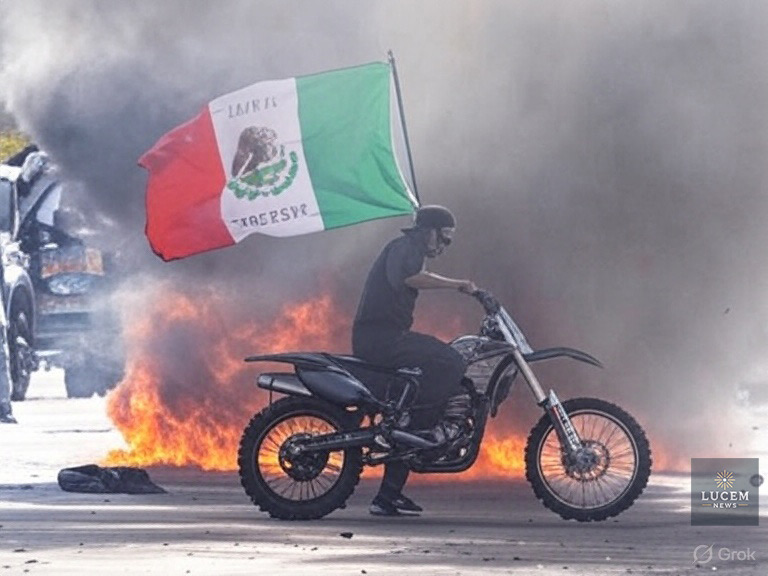
– President Trump has authorized the deployment of the National Guard to Los Angeles amid violent anti-ICE protests.
– Governor Gavin Newsom and local officials express strong opposition to federal intervention.
– The Department of Homeland Security labels the attacks on law enforcement as “despicable.”
– Previous attempts to address similar situations in 2020 led to significant damage without substantial response from state leaders.
– Protests against ICE have intensified, often escalating into violence.
– Some political analysts suggest that the funds collected by BLM were not utilized for community benefits as promised.
Connect the Red Dots.
In a tumultuous turn of events, the bustling streets of Los Angeles once again find themselves at the heart of national attention, with President Trump taking decisive action by federalizing 2,000 California National Guard troops to counter the growing wave of anti-ICE protests. This move has been publicly denounced by Governor Gavin Newsom, who portrays his stance on social media, highlighting a tense standoff between state and federal leadership.
The protests, initially sparked by federal enforcement actions targeting illegal immigrants, quickly spiraled into chaos, leaving a trail of destruction in their wake. With cars set ablaze, and federal buildings defaced with graffiti, the Department of Homeland Security decried the violent targeting of law enforcement officials. Yet, local government officials have shown limited intervention, opting instead to offer rhetoric support for immigrants.
The scenes of mayhem echo the 2020 protests, where the aftermath left billions in damages without proportional state intervention. Critics have pointed out that while Black Lives Matter movements raised significant funds during such times, tangible community benefits reportedly fell through the cracks, raising questions about financial accountability.
The deployment of troops has not only intensified the political divide but also forced a nationwide introspection on how protests are managed and perceived. Onlookers are split between viewing the National Guard’s role as a necessary measure to restore order or an overreach of federal power encroaching on states’ rights.
As protestors continue to flood the streets, the situation evolves into a broader discourse on immigration policy and law enforcement’s place in urban settings. The echoes of chants accusing police of collaborating with ICE resonate against the backdrop of a city teetering on the edge of civil disorder.
The broader implications of these actions extend beyond Los Angeles, potentially setting a precedent for how similar protests might be handled in the future. With tensions escalating, a delicate balance must be struck to ensure the protection of citizens while respecting the rights to peaceful protest.
Editorial Opinion:
What we’re witnessing in Los Angeles is both unprecedented and unsustainable. As federal troops move in to restore order, there’s an unsettling sense of déjà vu—reminiscent of the 2020 protests where arson and chaos ruled the streets, unchecked by those supposedly in charge. And here we are again, with Governor Newsom playing the same tired tune of opposition without actionable alternative solutions. It begs the question: Are state leaders prioritizing ideological grandstanding over genuinely addressing public safety?
It’s high time we had an honest conversation about the effective utilization of funds and resources. Communities that once rallied behind the BLM banner still face the same systemic challenges they did a few years ago. Were promises merely empty words or sincerely actionable plans? It’s a moment for reckoning, not just for California but for the entire nation, to reflect on past actions and ensure accountability at all levels.
